Stormwater Management
Water pollution degrades surface waters making them unsafe for drinking, fishing, swimming, and other activities. As authorized by the Clean Water Act, the National Pollutant Discharge Elimination System (NPDES) permit program controls water pollution by regulating point sources that discharge pollutants into waters of the United States. Point sources are discrete conveyances such as pipes or man-made ditches. Individual homes that are connected to a municipal system, use a septic system, or do not have a surface discharge do not need an NPDES permit; however, industrial, municipal, and other facilities must obtain permits if their discharges go directly to surface waters.
Preventing water pollution is a responsibility that requires assistance the entire community. By implementing simple steps in regular everyday activities, water pollution can be reduced significantly.
Making Water Quality A Top Priority
 The City of San Fernando strives to be an environmental steward by making water quality a top priority. The City's storm drain system is designed to prevent flooding and protect residents, but it needs protection itself. Unlike the sanitary sewer system that collects and treats water from sinks and toilets, the water that enters the storm drain system drains directly to local water bodies and eventually into the Pacific Ocean without being treated. Therefore, any pollutants, such as bacteria and metals, that make their way into our storm drain system will eventually end up in our creeks and ocean, which can be harmful to the environment and human health.
Fortunately, there are some simple ways that you can help reduce stormwater pollution: dispose of trash and pet waste in a trash receptacle, fix leaks on vehicles, and wash your vehicle at a car wash, which is designed to direct wash water to the sanitary sewer. Following these simple practices can help reduce pollution and improve water quality for the environment and residents of our City.
We thank you for helping make our City an exemplary model of environmental stewardship. To learn more about how to protect our local waterways, please contact the Public Works Department at PublicWorks@sanfernando.gov.
Haciendo la Calidad del Agua la Máxima Prioridad
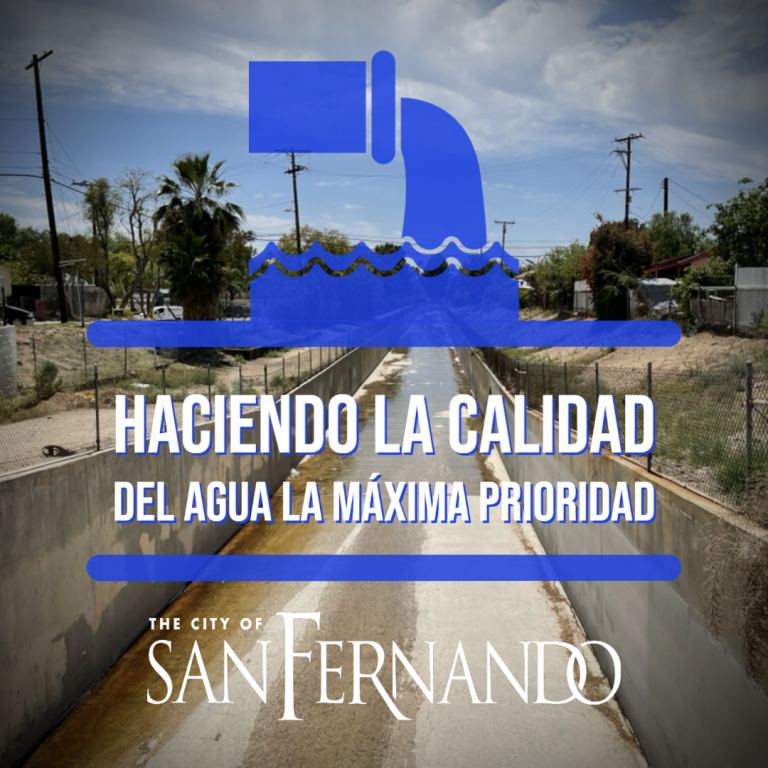 La Ciudad de San Fernando se esfuerza por ser un administrador ambiental al hacer de la calidad del agua una prioridad máxima. El sistema de drenaje pluvial de la ciudad está diseñado para evitar inundaciones y protejer los residents, pero el sistema necesita proteccion en sí mismo. A diferencia del sistema de alcantarillado sanitario que recolecta y trata el agua de los lavabos e inodoros, el agua que ingresa al sistema de drenaje pluvial drena directamente a los cuerpos de agua locales y eventualmente al Océano Pacífico sin ser tratada. Por lo tanto, cualquier contaminante como bacterias y metales que lleguen a nuestro sistema de drenaje pluvial eventualmente terminará en nuestros arroyos y océanos, lo que puede ser dañino para el medio ambiente y la salud humana.
Afortunadamente, hay lagunas maneras simples en las que puede ayudar a reducir la contaminación de las aguas pluviales: deseche la basura y los desechos de mascotas en un recipiente para basura, arregle las fugas de los vehículos y lave su vehículo en un lavadero de autos, que está diseñado para dirigir el agua de lavado al drenaje sanitario. Sequir estas práctices simples puede ayudar a reducer la contaminación y mejorar la calidad del agua para el medio ambiente y los residents de nuestra ciudad.
Le agradecemos por ayudar a hacer de nuestra ciudad un modelo ejemplar de administración ambiental. Para obtener más información sobre cómo proteger nuestras vías fluviales locales, favor de comunicarse con Public Works al PublicWorks@sanfernando.gov.
Stormwater Management
The City of San Fernando believes part of maintaining a beautiful city is through the protection of our waterways. San Fernando is located in the Upper Los Angeles River Watershed. A watershed is the total land area that drains rainfall and runoff, including pollutants, to local storm drains, creeks, and the Pacific Ocean without being treated. It is important keep our watersheds clean so we can have beautiful, healthy, and safe rivers and beaches.
What is stormwater?
Stormwater is runoff from rainfall that drains through natural and urban areas. Stormwater flows into stormdrains, through creeks, and eventually to the ocean and can pick up urban pollutants along the way. The city has a National Pollutant Discharge Elimination System (NPDES) permit in which the city must take many measures to prevent stormwater pollution. The permit contains multiple programs that are implemented by the city: public outreach, illicit discharge and illicit connection elimination, development planning, development construction, and public agency activities. With the implementation of these programs, the city can achieve water quality standards as enforced by the Regional Water Quality Board – Los Angeles.
And you can help!
For Residents:
CLICK HERE(PDF, 213KB) for Tips
There are many household pollutants to be aware of and ways you can prevent stormwater pollution:
- Do not dump anything into the streets, gutter, or stormdrain inlets.
- Household fertilizers, pesticides, and other hazardous wastes are toxic for the environment. Always follow the directions on the container, avoid application before rain, and avoid runoff. Try to use environmentally friendly fertilizers and pesticides if possible.
- Avoid washing off driveways, sidewalks, and walkways.
- Pet waste contains bacteria. Always pick up after your pet and dispose of waste in a nearby trash can.
- Prevent unnecessary runoff by fixing sprinkler heads or installing drip irrigation.
- Do not litter and always place trash, including cigarette butts, in a proper waste receptacle.
- Do not discharge pool water to the storm drain.
- Wash your car at a car wash or where wash water will drain to a grassy or landscaped area. Car washes collect all runoff and prevent soaps from entering the storm drain system.
- Keep an eye out for a Household Hazardous Waste collection event in your neighborhood.
- Take Action! Volunteer at a local creek clean-up. Consider California Coastal Cleanup Day or join a Friends of the LA River Cleanup event.
For Businesses:
- Trash Maintenance: Always keep trash receptacle lids closed and area clean of trash and pollutants. Never put liquid waste into dumpsters. Never wash down trash enclosures; instead, sweep the area to keep it clean.
- Oil and Grease: Restaurants must maintain grease traps and interceptors to prevent spills and leaks. Never pour grease or oil into the storm drain.
- Cleaners and chemicals: Store where they are protected from rainfall and runoff. Use secondary containment to prevent accidental leaks from entering the storm drain
- Surface cleaning: Always sweep up spills and debris in parking lots, sidewalks, and other surfaces. If a liquid spill occurs, use an absorbent, such as kitty litter, to clean. Never wash down surfaces.
To report illegal dumping or discharges, please call the City of San Fernando at 818-898-1200 or the county-wide hotline at 1-888-CLEANLA.
Contact Information
Operations Center | Public Works Department
120 Macneil St, San Fernando, CA 91340
Ramiro Arias, Public Works Field Supervisor I
(818) 898-1293 | RArias@sanfernando.gov
Regular Business Hours
Monday through Thursday | 7 am to 4:30 pm
Friday | 7 am to 3:30 pm